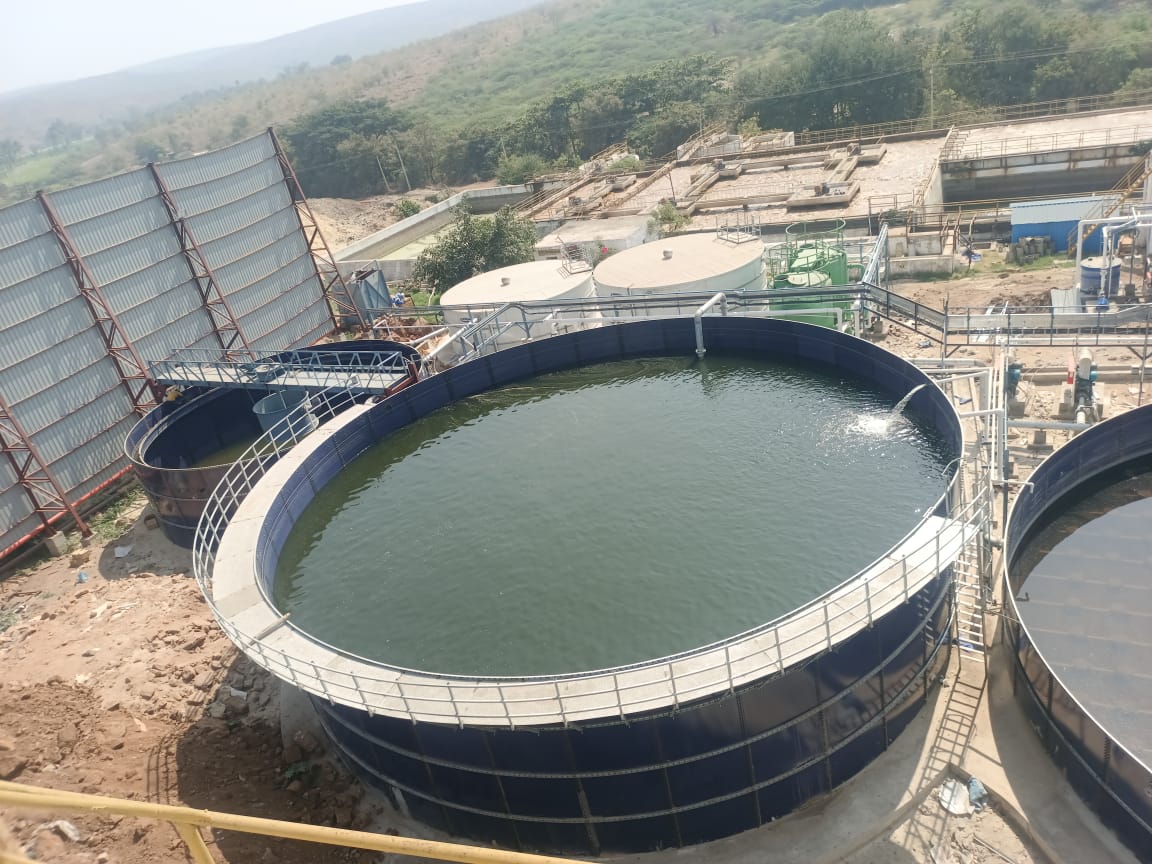
Glass-Fused-to-Steel (GFS) Bolted Storage: Overview
The SAGOSI Glass-Fused-to-Steel (GFS) tank combines the structural strength of steel with the corrosion resistance of glass, fused together at 1500 to 1650 degrees Fahrenheit to form a smooth, cohesion-less, anti-bacterial storage surface. Designed to the ANSI AWWA D103-09 standard and certified for drinking water and food-grade applications, GFS bolted storage tanks are ideal where water quality, hygiene and long service life all matter.
Unlike welded or epoxy-coated tanks, a GFS tank requires no on-site welding and no periodic recoating — the glass surface will not rust, corrode or support bacterial growth, and individual panels can be repaired or replaced on site. Capacities range from 27 m³ to over 6,000 m³, and the bolted construction means the tank is relocatable and expandable. For potable water reservoirs, fire water, aeration and effluent duty, GFS delivers one of the lowest lifecycle costs in bolted steel storage.
Key Advantages of the SAGOSI Glass-Fused-to-Steel (GFS) Bolted Storage
- Glass fused to steel at 1500 to 1650 degrees Fahrenheit for exceptional corrosion resistance
- Certified for drinking water and food-grade applications
- Smooth, cohesion-less, anti-bacterial surface
- Low maintenance and easy to repair on site
- Designed to ANSI AWWA D103-09 standard
- No on-site welding or recoating required
Technical Specifications: Capacity, Standards & Materials
| Tank Type |
Glass-fused-to-steel bolted panel |
| Panel Process |
Glass fused to steel at 1500 to 1650 degrees Fahrenheit |
| Design Standard |
ANSI AWWA D103-09 |
| Certification |
Drinking water and food-grade approved |
| Capacity Range |
27 m3 to over 6,000 m3 |
| Surface Finish |
Smooth, cohesion-less, anti-bacterial |
| Maintenance |
Low — easy on-site repair |
| Relocatable |
Yes |
Typical Applications of the Glass-Fused-to-Steel (GFS) Bolted Storage in India
-
Drinking and potable water
-
Fire protection water
-
ETP / STP / aeration tanks
-
Industrial effluent
-
Bulk liquid storage
Glass-Fused-to-Steel (GFS) Bolted Storage — Frequently Asked Questions
What is a glass-fused-to-steel (GFS) tank?
A GFS tank is built from steel panels with a glass layer fused to the steel at 1500 to 1650 degrees Fahrenheit. The result is a panel that has the strength of steel and the corrosion and chemical resistance of glass.
Are GFS tanks safe for drinking water?
Yes. SAGOSI GFS tanks are certified for drinking water and food-grade applications. The smooth, cohesion-less glass surface is anti-bacterial and does not leach into the stored liquid.
What capacities are available in GFS bolted tanks?
GFS bolted storage tanks are available from 27 m³ to over 6,000 m³, with diameter and height configured to suit the site footprint and head requirement.
How does a GFS tank compare with an epoxy-coated tank?
The glass layer on a GFS tank is fused into the steel and will not chip, peel or need recoating, whereas epoxy coatings degrade over time. GFS is the premium choice for potable water; our micro-coated tank is a strong value alternative.
Interested in the Glass-Fused-to-Steel (GFS) Bolted Storage?
Send us your capacity, site and process requirements — our engineering team will
respond with a tailored proposal.
Request a Quote