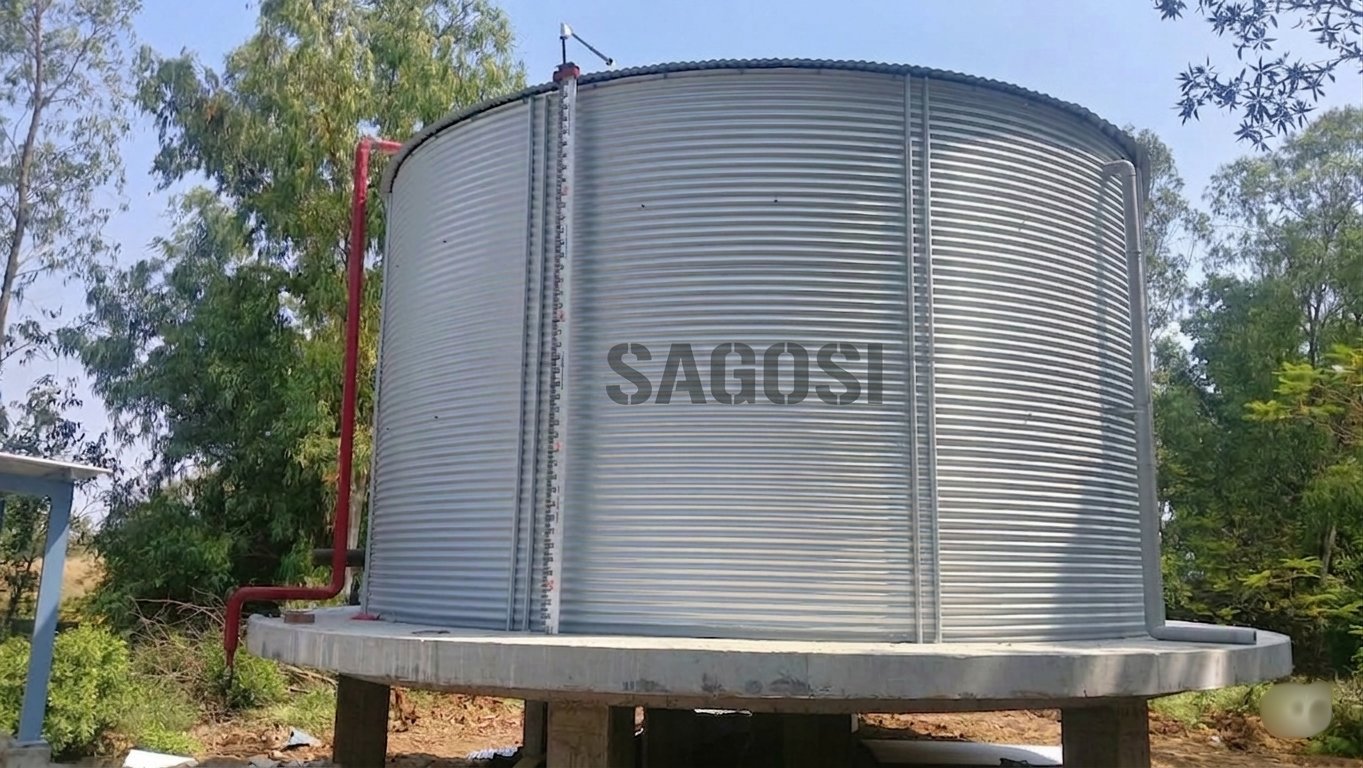
Our Zincalume bolted steel tanks for potable water use a multi-layered reinforced inner liner with a Metallocene contact layer — a specification that delivers measurably better water quality and longer service life than the PVC liners still common in lower-grade tanks. This page explains why the liner technology matters and what specifically makes our system suitable for drinking water service.
The Metallocene Contact Layer — Why It Matters for Drinking Water
The Metallocene contact layer is the innermost film that touches your stored water. It is produced using metallocene-catalysed polyethylene technology — a polymer science advance that delivers a tightly controlled molecular structure with consistent purity, uniform film strength, and exceptional chemical inertness.
Key advantages of the Metallocene contact layer
- Certified food-grade and tested compliant with NSF and equivalent drinking water standards
- Inert to chlorine, chloramines and standard water treatment disinfectants — no degradation, no taste transfer
- No plasticisers or stabilisers that can leach into stored water over time
- High puncture and tear resistance — better protection against installation damage
- Superior weld integrity at seams, eliminating the most common liner failure point
- UV-stable molecular structure, resisting embrittlement even in elevated temperatures
PE Liner vs PVC Liner: Why the Choice Matters
PVC (polyvinyl chloride) liners have been used in water storage for decades because they are inexpensive and easy to fabricate. But PVC has a fundamental drawback for long-term drinking water use: to make PVC flexible enough for liner applications, manufacturers add plasticisers — chemical additives that, over years of contact with water, can migrate out of the liner and into the stored water.
PE (polyethylene) liners — particularly modern Metallocene-grade PE — contain no plasticisers at all. The polymer is inherently flexible and inherently inert. This is the single most important reason PE has become the international standard for potable water storage where long service life and water purity are non-negotiable.
Side-by-side comparison
| Factor | PVC Liner | PE Liner (Metallocene) |
|---|---|---|
| Plasticiser content | Up to 30% by weight | None |
| Migration of additives | Yes — increases over time | No migration |
| Service life (potable) | 10-15 years typical | 25+ years engineered |
| Chemical inertness | Moderate; degraded by chloramines | High; resistant to all standard disinfectants |
| Taste / odour transfer | Possible after 5-7 years | None |
| Brittleness in heat | Becomes brittle as plasticisers leach | Remains flexible throughout life |
| Food-grade certification | Available but variable | NSF / WRAS / equivalent standards |
| Suitability for drinking | Acceptable short-term | Specified for long-term potable use |
What This Means for Your Project
If you are specifying a tank for drinking water in a residential complex, industrial estate, school, hospital, hotel, or municipal facility, the liner specification is not a footnote — it is the single most important technical decision you will make. A PVC liner may save you a few percent at purchase price; a PE liner with a Metallocene contact layer protects your water quality and your reputation for the full life of the tank.
Standards and Compliance
- Tank design to Australian Standard AS 2304-2011 and AS/NZS standards
- Liner manufactured to food-grade specifications, certified for potable water contact
- Metallocene contact layer tested against NSF / WRAS equivalents for drinking water safety
- Ring beam foundation engineered to project-specific soil and seismic conditions
- Full quality control and material traceability throughout manufacture and installation
Capacity Range for Drinking Water Tanks
Our Zincalume bolted tanks for drinking water service are available from 10,000 litres up to 30,00,000 litres — covering single-building requirements through large municipal and industrial estate installations. Tanks up to 100 KL are typically erected on site in 3 to 4 days. The bolted construction also means tanks can be expanded or relocated as your water demand changes.
Discuss your drinking water project
Our engineering team will respond with a tailored quotation based on your capacity, site and process requirements.
Request a Quote